MetaData: How Island Dream Clean and other companies focus on people, the planet, and financial results.
For many years, traditional business success was defined solely by financial metrics. Companies focused primarily on profit, often at the expense of their employees and the environment. However, this narrow view has evolved. The flaws in this approach became evident as businesses faced scrutiny over their social and environmental impacts. Enter the concept of the Triple Bottom Line (TBL), a framework promoting broader measurements of success: people, planet, and profit.

Source: Green Earth with hugging hands of growth.
What is the Triple Bottom Line?
First popularized by sustainability advocate John Elkington in the 1900s, the TBL framework encourages companies to evaluate their success not just through financial results but also by their impact on society and the environment. It consists of three main components:
- People: This dimension focuses on how businesses treat their employees, customers, suppliers, and communities. It includes considerations like fair wages, safe working conditions, diversity, ad ethical sourcing.
- Planet: This aspect examines a company’s stewardship of the environment, assessing factors such as carbon emissions, resource consumption, waste management, and investments in sustainable technologies.
- Profit: Financial performance remains essential, but it is one of three pillars under TBL, emphasizing that businesses can be financially viable while also fostering social and environmental responsibility.
Why TBL Matters for Business and Investors
- Long-Term Risk Management: Companies prioritizing the Triple Bottom Line may be better equipped to navigate future challenges. For instance, firms proactively reduce emissions can avoid potential costs associated with regulatory compliance. Those offering fair wages and safe conditions are less likely to incur labor disputes or reputational damage.
- Brand and Reputation: Modern consumers are increasingly drawn to businesses aligned with their values. Studies have shown that a significant percentage of consumers are willing to modify their purchasing habits to support companies that prioritize sustainability. By embracing TBL, businesses cultivate customer loyalty and attract top talent.
- Investor Confidence: The TBL approach allows investors to discern which companies are resilient in the face of change. Companies integrating sustainability and fairness into their practices often demonstrate stability, making them attractive longterm investments.
Island Dream Clean in Action
At Island Dream Clean, we are committed to embodying the Triple Bottom Line. Our mission is rooted in the belief that successful business practices should harmonize with social and environmental responsibilities. We prioritize our staff by offering fair wages, comprehensive training, tracking and safety applications, and a supportive working environment. Our commitment to diversity ensures that everyone feels valued and included. Our cleaning products are eco-friendly , ensuring minimal impact on the environment. We practice responsible waste disposal and promote sustainability in all our operations, using green practices that help preserve our planet for future generations. While we remain focused on acheiving financial viability, we view profit not as an end goal but as a tool that allows us to achieve our broader mission.
Source: Blocks of green, yellow, and blue plants, clouds, sun and water.
Challenges and Critiques of the Triple Bottom Line
Implementing TBL can present challenges:
- Measurement Issues: Social and environmental outcomes can be difficult to quantify. The absence of standardized metrics complicates efforts to evaluate results effectively. Luckily, there are startups and small businesses crafting framework catered to each business individually through the Global Reporting Initiative Standards.
- Trade-Offs: Companies may find that excelling in one area can lead to shortcomings in another. Rapid growth in ethical sourcing could strain local suppliers, for instance.
- Risk of “Window Dressing”: Some businesses may superficially adopt TBL principles without making meaningful changes. For stakeholders, it’s crucial to seek genuine commitment rather than mere rhetoric.
Despite these challenges, the Triple Bottom Line framework encourages businesses to shift from a narrow focus on profit toward a more holistic view of success, fostering positive societal impacts.
TBL in Practice: Case Studies
- Unilever: Committed to sustainability, Unilever integrates eco-friendly practices across its business model while honoring social responsibilities.
- Patagonia: Renowned for its environmental commitment, Patagonia invests in sustainability initiatives and encourages circular business models, fostering customer loyalty.
- Interface Carpets: This manufacturer has successfully redefined its business strategy to focus on carbon-neutral products and circularity, appealing to eco-conscious buyers.
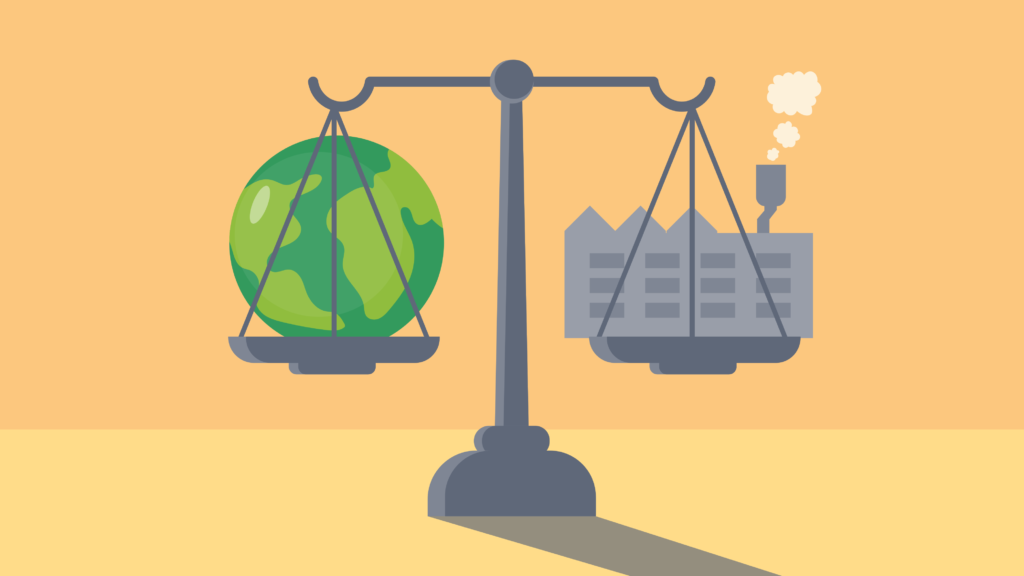
Source: Scale weighing the Earth against a factory.
The Island Dream Clean Effect
For us at Island Dream Clean, the Triple Bottom Line goes beyond a business strategy; it is an integral part of our identity. By harmonizing our pursuit of profit with our commitments to social and environmental well-being, we aim to create a lasting positive impact.
As an investor or a customer, supporting companies that prioritize TBL can yield benefits that go beyond financial returns. We invite you to join us on this journey toward a more sustainable and equitable future.
Sources
- Elkington, John. Harvard Business Review, 2018.
- IBM. Sustainability and Consumer Behavior Report 2022.
- Global Reporting Initiative (GRI). Sustainability Reporting Standards.
- SASB. Sustainability Accounting Standards Board.
- PDI Technologies: Consumers Will Pay More for Sustainability.
- Marsh McLennan: ESG as Workforce Strategy